“The Process Is The Product”
Current Position
You have been considering investing in property development or selling your current home, which may have development potential, and you have been thinking.
"With the right team, maybe I could do this myself?"
Joint Venture Opportunity A Development Agreement
A Development Agreement is when two or more parties agree to pool their resources to develop property. This provides an exciting opportunity to improve and grow your financial position.
A typical example is where one party owns or purchases the land, and the other provides the experience, knowledge and builds the new residences. When designed appropriately, partnerships like this can be highly profitable and satisfy the collective interests of both sides.
Our process is clear and uncomplicated. We prioritise what’s most important during every stage and provide our clients with an easy-to-follow road map that explains the entire sequence of events. You will be surprised how much you can achieve simply by breaking the process down into a series of small, manageable goals.
We appreciate the importance of owning your own home, so we always provide the opportunity for our clients to retain ownership of the new residences at project completion.
We understand the importance of establishing an open and honest relationship with our clients.

Our Clients Are Our Partners
Getting To Know Each Other.
Development Agreements are truly collaborative transactions where both parties are mutually invested, so we understand the importance of establishing an open and honest relationship with our clients. Property is always about people first, so during this first stage, we listen to your ideas and take time to understand your point of view.
The first meeting aims to establish the client's objectives and assess whether they can be achieved. Once established, the client's objectives will form the basis and structure for the Development Agreement, generally consisting of a base land value, schedule of payments, structure, potential profit, and tax implications.
Once the initial structure is established, we will complete a preliminary walk-through of the existing opportunity and the risk factors that may be encountered in achieving the potential outcome.
This transparent insight provides our clients with a clear understanding of the entire development program every step of the way.

Initial Research
Our financial consultant will then conduct initial research to assess your financial position and suitability for undertaking a multi-unit development. Additionally, during this stage, further due diligence will be completed on the project, including any constraints that could potentially encumber the land or present a risk to the project's success moving forward. If this round of initial due diligence results in the project being viable, our team will proceed to the next stage.
Development Yield
During this stage, our architects and town planner will draft a unique concept massing plan designed specifically for the site under consideration. This initial concept plan will enable us to accurately assess the development yield or number of townhouses or apartments that may be constructed, providing a solid foundation for the preliminary feasibility analysis to be completed in the next stage.

Feasibility Analysis Report
A feasibility analysis is a vital process involving specialised due diligence to assess the project's financial potential. This comprehensive analysis serves as a crucial decision-making tool, aiding stakeholders in making informed decisions regarding the development's financial viability.
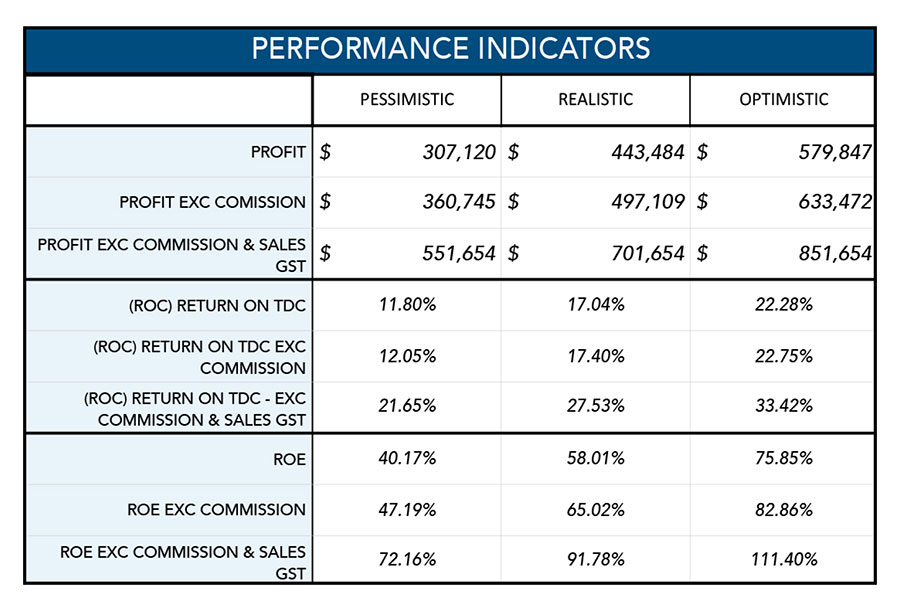
The feasibility report is prepared in consultation with several professional consultants who are specialists in their area of practice accounting for varying economic factors, including cost-benefit analysis, project cost scheduling, senior debt funding requirements, and profit potential.
Sensitivity analysis is then conducted to gauge the impact of variable economic conditions on the project. The final report will contain a performance indicators schedule detailing the return on cost (ROC), return on equity (ROE), return on cash (CoC) and total development profit.
Talk With Your Trusted Inner Circle
At this stage, you have a comprehensive understanding of the project's development potential. We have provided a detailed property report and feasibility analysis outlining the risks and potential profit should you choose to proceed.
This research is provided to our clients on a no-obligation basis. We encourage our prospective partners to review the project's details with their families and any professional consultants they choose.
We welcome the involvement of your lawyer, accountant, and financial advisors in the decision-making process. If you or your advisors are not entirely comfortable with proceeding, you are completely free to move on with no questions asked.

Our Approach to Drafting Contracts is Fluid and Flexible.
Contract Preparation
Given the uniqueness of each client, we do not employ pre-written contracts. Our approach to drafting contracts is fluid and flexible.
This process begins with a collaborative meeting between Daniel King and the client, serving as a platform for both parties to exchange ideas and collaboratively draft a bespoke agreement that meets the collective interests of both sides.
This initial draft is called a Memorandum of Understanding or (MOU).
This stage is crucial as it allows us to tailor an agreement to the project's unique circumstances and stakeholder interests.
Subsequently, our legal team will prepare a legally binding contract based on the preliminary MOU. Throughout this process, our lawyers will consult with your legal counsel to create a custom contract specifically designed for you.
Once the contract is finalised and mutually agreed upon, the final document will be forwarded to your lawyer for review and execution.
We have a Clear Understanding
of the Planning Regulations Affecting
Design and Development.
Preliminary Design Plans
Concept Design
We conduct a thorough site analysis to understand the unique characteristics and potential of the location, including evaluating topography, views, sunlight, surrounding context, and town planning constraints. Based on this analysis, we develop a conceptual design that harmonises with the site’s natural features while fulfilling the local council's planning requirements.
Detailed Design and Material Selection
Once the conceptual design is drafted, we proceed to the detailed design phase. This involves developing comprehensive architectural drawings to illustrate the design, including floor plans, elevations, and sections. To ensure the highest standards of quality and precision, we collaborate with a network of specialists, including architects, structural engineers, interior designers, landscape architects, and sustainability consultants. This collaborative approach ensures that all aspects of the project are meticulously planned and executed.
OUR DIRECTORS HAVE A 100% PLANNING APPROVAL TRACK RECORD TO DATE
Town Planning Approval
-

Assessment of Architectural Plans
Town Planning approval begins with a thorough review of the proposed development against council planning policies, including zoning regulations and urban design principles. We ensure the proposal respects the area's character and adheres to height, setback, site coverage, and open space requirements.
-
Planning Application
Following the thorough assessment and consultation process, we prepare a comprehensive planning application for submission to the council. This application includes all required documentation, such as site plans, architectural drawings, planning reports, and any specialist studies (e.g., traffic, environmental). The application is designed to demonstrate how the proposed development complies with council policies and addresses any issues raised during the consultation phase.
-
Council Review And RFI
Upon submission, the council undertakes its formal review process. This involves internal referrals to various council departments, such as engineering, traffic management, and environmental health, to ensure all aspects of the development are thoroughly evaluated. The council may also request further information (RFI) or plan amendments to address specific concerns. Once the review is complete, the council will make a decision on the application, which can result in approval, approval with conditions, or refusal.
-
Final Decision
Approval may be granted outright or with conditions. The final step involves satisfying the conditions of approval, which may include providing additional plan details, securing permits for work, and ensuring compliance with any specific requirements set by the council. Once all conditions are met and permits obtained, the development is granted final approval, allowing the construction phases to commence.
Working Drawings &
Construction Permit
Working Drawings
Working drawings, also known as construction drawings, are comprehensive sets of drawings used in the construction industry to provide detailed instructions and specifications for building a structure. These drawings serve as a vital communication tool between the architect, engineers, contractors, and other stakeholders involved in the construction process. They translate the design concept into practical, executable details, ensuring the project is built according to the design intent and complies with the National Construction Code (NCC) and Australian Standards.
Working Drawings are meticulously assessed against the National
Construction Code (NCC)
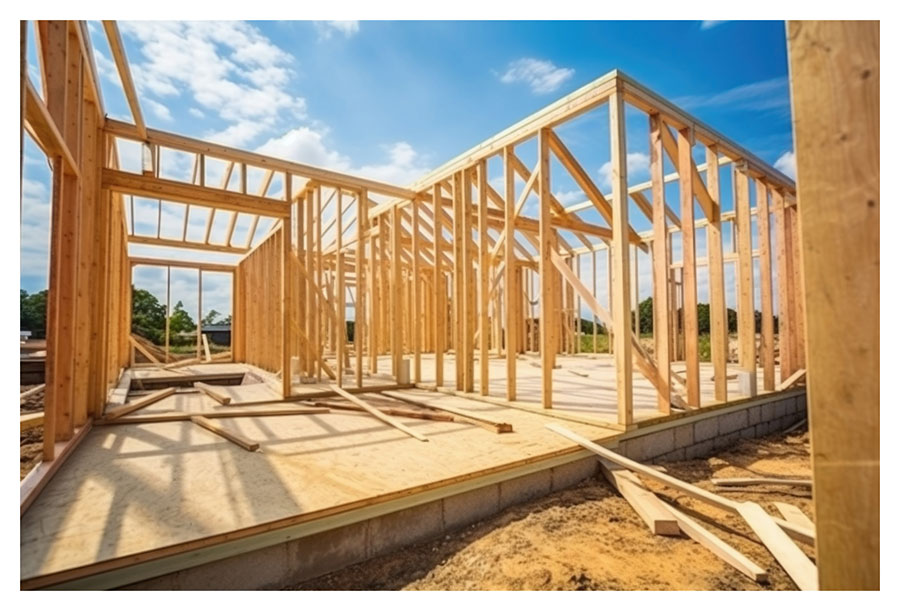
Construction Permit
1 National Construction Code (NCC) Assessment
A licensed building surveyor will meticulously assess the working drawings against the National Construction Code (NCC), which sets out the minimum requirements for building design, construction, and performance in Australia. This assessment evaluates structural integrity, fire safety, accessibility, energy efficiency, and health and amenity.
2 Non-Compliance and Recommendations
Where areas of non-compliance are identified during the assessment, the building surveyor will provide a detailed report outlining these issues and offer recommendations for modifications. Throughout the assessment process, we may coordinate with various specialists, such as fire safety engineers, structural engineers, and accessibility consultants, to ensure all specific technical requirements are met while maintaining the integrity and vision of the project.
3 Issuance of the Building Permit
Once all identified non-compliances have been addressed and the plans are confirmed to meet the requirements of the NCC and other relevant regulations, the building surveyor will issue the building permit. This permit is a formal approval that allows the construction work to commence,
Finance
KingCorp understands the funding challenges faced by borrowers and is committed to sourcing and delivering the most competitive, flexible, and innovative finance solutions tailored to your project. The financing structure will vary depending on the size and scope of the project. Smaller projects, such as duplexes, will generally be financed through residential lenders, whereas larger developments, such as multi-unit complexes, will require commercial lending.
Commercial finance differs significantly from traditional residential finance. The interest on commercial finance is capitalised during the development period, with the entire loan, including interest, repaid to the lender upon settlement of the completed lots. In contrast, the interest on residential finance is paid monthly throughout the project lifecycle, with an additional principal component that may or may not form part of the monthly commitment.
As part of the application process, KingCorp will prepare a comprehensive business plan and valuation report summarising your project. This plan will include an executive development summary, economic insights and market demographics, design and specifications schedule, plans, feasibility analysis, MS project schedule, and local authority approvals.

We Care
About The Buildings
We Leave Behind.
Construction
Above all else, quality construction has always been our primary focus, and it's what we're still focused on today. We care about the buildings we leave behind.
Modern construction techniques are continually changing and improving. Our resources and construction experience ensure we can deliver the latest construction technologies and sustainable practices to build homes that are not only executed to the highest standards but are also environmentally responsible.
From the initial concept to the final landscaping touches, we prioritise quality and innovation, setting new benchmarks in residential construction.
Subdivision
Before the individual lots can be sold, they will first require their own certificate of title.
During the earlier construction phase, our land surveyor will have prepared a preliminary plan of subdivision, including the layout of lots, access points, common areas, dimensions, and the location of infrastructure like roads, drainage, and utilities.
This subdivision plan will be assessed under the relevant state planning policy and, once approved, submitted to the land registry office for registration.
After registration, the new titles for each lot will be issued, allowing them to be sold or retained as separate soul occupancy units (SOU).
We are passionate about designing beautiful homes and delivering outstanding results to our valued partners.
Project Completion
Our detailed market demand research, conducted previously during the design phase, will guarantee that your development will be highly desirable to numerous potential buyers should you choose to sell. However, our greatest pleasure is seeing our clients receive the keys to their brand-new home. There is a great sense of pride in moving into a new development that is uniquely yours. Everything is perfectly clean and pristine; every detail has been carefully considered, from the modern appliances to the placement of the smallest light switch.
Thank You
Thank you for taking the time to consider this exciting opportunity available to you and your family. I am genuinely
passionate about property and would welcome the opportunity to work with you in the future.
I invite you to contact me for an obligation-free discussion.
 SINCERELY